Tiepolo’s staircase ceiling, and the staircase under it
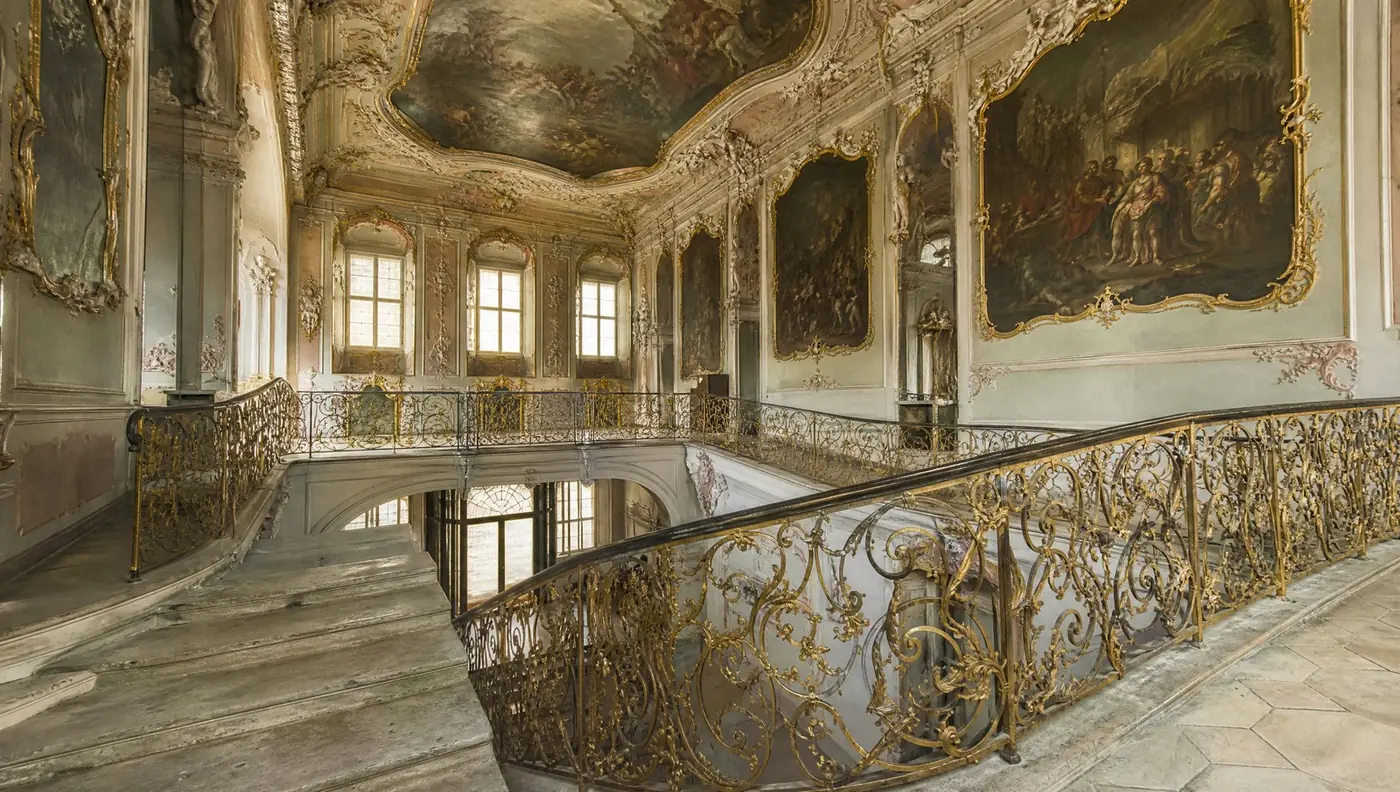
Balthasar Neumann threw a vault over the staircase that spans eighteen metres by thirty and rises twenty-three metres at its highest point, with nothing underneath holding it up. In 1752 and 1753 Giovanni Battista Tiepolo, summoned from Venice for the job, painted the underside of it. The Bavarian Palace Administration calls the result “the largest ceiling fresco ever painted” and puts it at around 600 square metres.
The engineering is the first thing, not the painting
An unsupported vault of eighteen by thirty metres is a structural argument before it is a surface. There is no column in the middle of that room, which is why the ceiling reads as one continuous field rather than as panels between supports, and why standing at the bottom of the flight gives you the whole of it at once. Neumann built the thing the painting needed before anybody had decided what the painting would be.
Twenty-three metres at the crown is roughly the height the ceiling sits above your head as you climb, which is the other half of the effect. You do not look at this fresco. You walk up towards it, slowly, on a staircase built to make you do exactly that.
The largest ever painted?
That is the operator’s claim and it is repeated here as theirs. The palace administration puts the fresco at around 600 square metres and describes it in those words. Other sources give slightly different areas, which is what happens when a curved surface has to be reduced to one number, and none of that changes what is over your head. This site quotes the figure the venue publishes and attributes the superlative to the people who make it.
What the fresco actually depicts is a longer conversation than the operator publishes, so there is no scene-by-scene reading here. That is the thirty minutes the guide is for, and the guide is already inside your ticket: English at 11am and 3pm, German every half hour. See the tour that comes with the ticket.
Do not photograph it first. Climb once looking up and stop halfway, where the geometry of the vault is still visible around the edge of the painting — that is the view that explains why the room is shaped the way it is.
Why it is still here
On 16 March 1945 a British air raid nearly destroyed the palace. The central block came through it — the Vestibule, the Garden Hall, the Staircase, the White Hall and the Imperial Hall — with the roofs gone. John Davis Skilton, a US Army Monuments officer, arrived that June and was instrumental in preserving the art. Reconstruction of the building ran from 1945 to 1987.
That is why the staircase is the one room in this palace where the question of what is original does not arise. It is on the short list of what survived. Most of the rest of what a visitor walks through is the work of those forty-two years, which is the subject of the 1945 raid and the rebuilding.
Getting under it
The state ticket, at about ten euros, gets you under it, with the guided tour included and under-18s free. Of the twelve guided listings around this city, one includes entry to the building: a winter half-day whose description walks the staircase and the Imperial Hall. The long coach day from Frankfurt adds a photo stop at the forecourt on its way back.
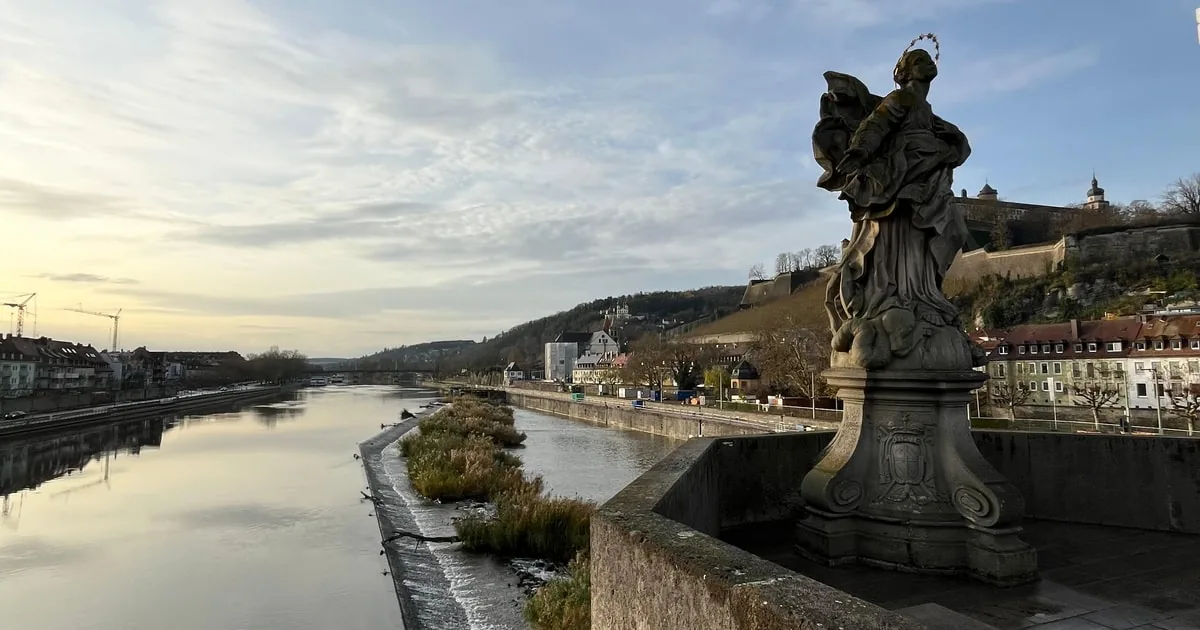 Includes entry
Würzburg in winter: Residence, Old Town and mulled wine
 Photo stop at the palace
Frankfurt: Romantic Road & Rothenburg ob der Tauber Tour
The rest of the interior, once you are off the staircase, is on what to see inside. What it costs is on the tickets page.
Frequently asked questions
How big is the Tiepolo ceiling in the Würzburg Residence?
The Bavarian Palace Administration gives it as around 600 square metres and calls it the largest ceiling fresco ever painted — their claim, quoted rather than asserted here. The vault beneath it spans 18 by 30 metres, rises 23 metres at its highest and is unsupported. Getting under it costs about ten euros; see tickets.
Who painted the ceiling and when?
Giovanni Battista Tiepolo, summoned from Venice, painted the staircase vault in 1752 and 1753. The staircase itself is Balthasar Neumann’s. Both survived the air raid of 16 March 1945 with the roofs above them destroyed, which is covered on the 1945 raid and the rebuilding.
Is the ceiling worth seeing on its own?
For most visitors it is the reason to buy a ticket at all: an unsupported vault of 18 by 30 metres, painted underneath in two years, reached by walking up towards it. The guided tour that explains it is already inside the ticket, as set out on the guided tours page.