What Würzburg is known for
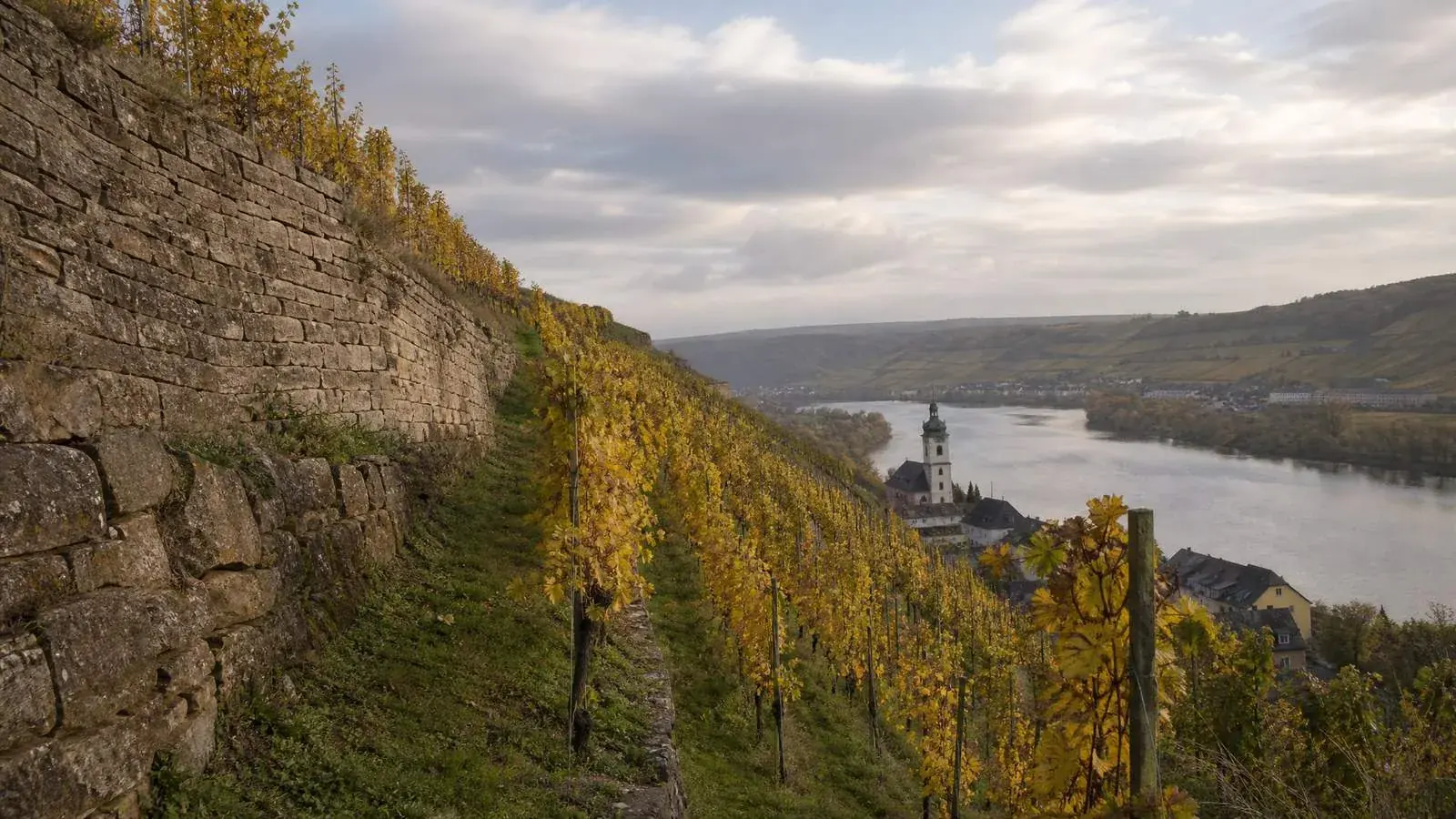
One palace, one ceiling and a great deal of wine. The Residenz was begun in 1720 and completed in 1744, became a UNESCO World Heritage Site in 1981, and carries on its staircase a fresco the Bavarian Palace Administration calls the largest ever painted. Underneath the same building runs a state wine cellar of 4,557 square metres. The city is also where the coaches head south down the Romantic Road.
The Residenz
Begun in 1720 and completed in 1744, with Balthasar Neumann as principal architect and Johann Lukas von Hildebrandt, Maximilian von Welsch, Robert de Cotte and Germain Boffrand alongside him. It was commissioned by the prince-bishops Johann Philipp Franz von Schönborn and his brother Friedrich Carl von Schönborn. UNESCO listed it in 1981, six years before the post-war reconstruction was finished.
That last detail is the one that tends to get left out, and it is the most interesting thing about the building’s modern life. The listing came while the work was still going on. What that work was is on the 1945 raid and the rebuilding.
The ceiling
Tiepolo was summoned from Venice and painted the staircase vault in 1752 and 1753, over an area the palace administration gives as around 600 square metres, on a vault that spans eighteen by thirty metres, rises twenty-three metres and stands up without support. The superlative attached to it belongs to the operator and is quoted rather than repeated flat. Everything about it is on Tiepolo’s staircase ceiling.
Franconian wine, and the cellar under the palace
The Staatlicher Hofkeller is the state wine estate whose cellar occupies the corridors of the former Prince-Bishop’s court cellar beneath the Residence: 4,557 square metres of it and 891 metres of corridor, built because Neumann was asked to put an excellent wine cellar into the plans. A palace with a working wine estate underneath is not a common arrangement, and it tells you what this region is about.
Above ground the wine shows up in almost every guided evening on offer: three Franconian wines on the old-town tour, 0.1 litre of it on the bridge on the Brückenschoppen, five tastings on the vineyard day. Which of them goes where, and what the state cellar itself offers, is on the cellar under the palace.
Franconian wine comes in a flat-bellied bottle you will not see much outside this region. If you want the short version of the local ritual, an hour on the bridge with a glass is the format the town invented for it.
The Romantic Road
The Rothenburg coaches leave from the main station here, from the long-distance bus platform, and run seven and a half hours with a German and English guide and entry to Weikersheim Castle. Rothenburg itself is about ninety minutes away. The bigger coach days that carry the Romantic Road name start elsewhere: one from Frankfurt at ten and a half hours, which calls at the Residence for a photo stop on the way back, and one from Munich, a Rothenburg day for anyone based there.
Local pride about all this is not understated. One reviewer of the standard walking tour reported the guide’s central claim: “Unser Tourguide war klasse. Er hat es geschafft zu vermitteln, Franken sei der „Nabel der Welt“ 😉” — Andreas, Germany, on Würzburg: Guided Walking Tour. Franconia as the navel of the world, winking.
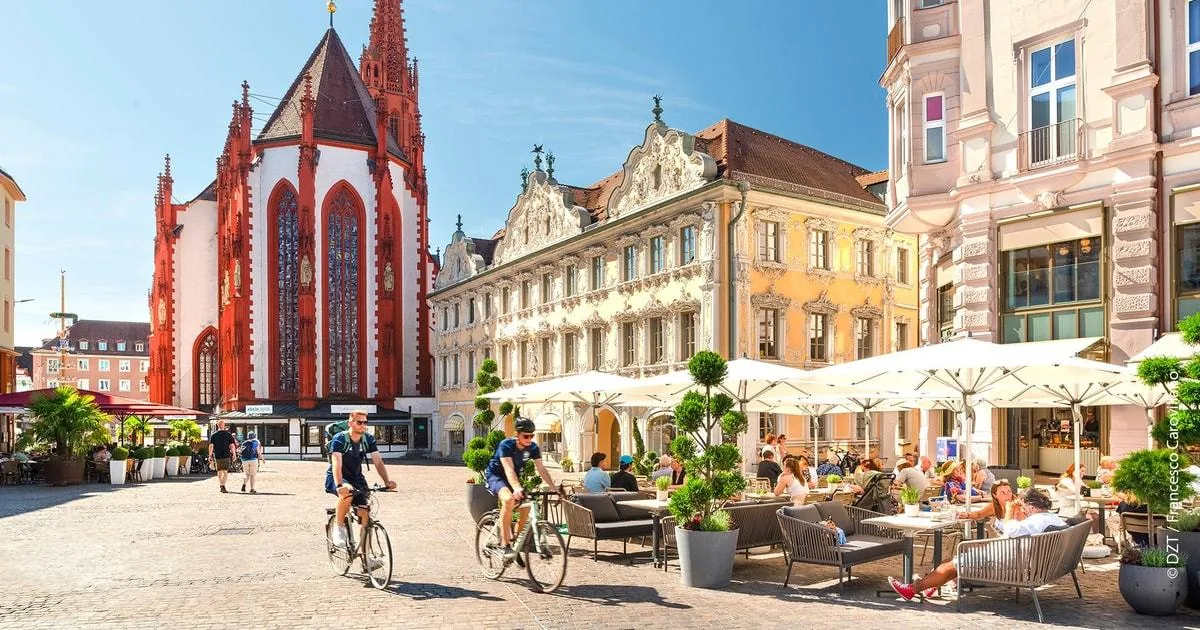 The standard walk
Würzburg: Guided Walking Tour
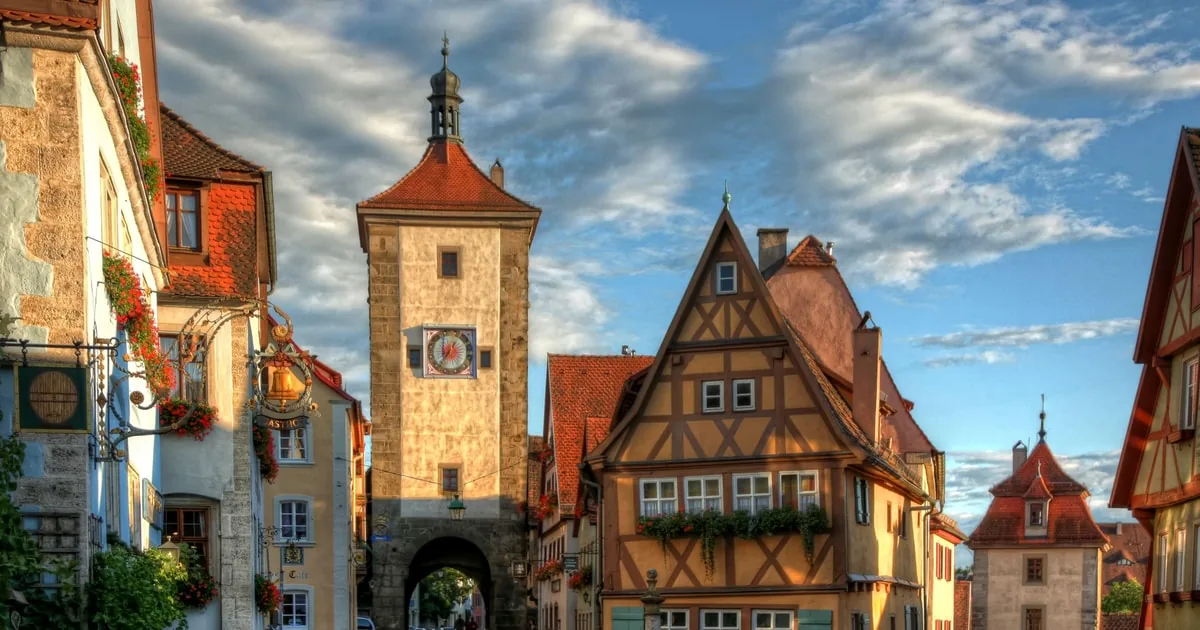 Leaves from here
Romantic Road & Rothenburg ob der Tauber Tour from Würzburg
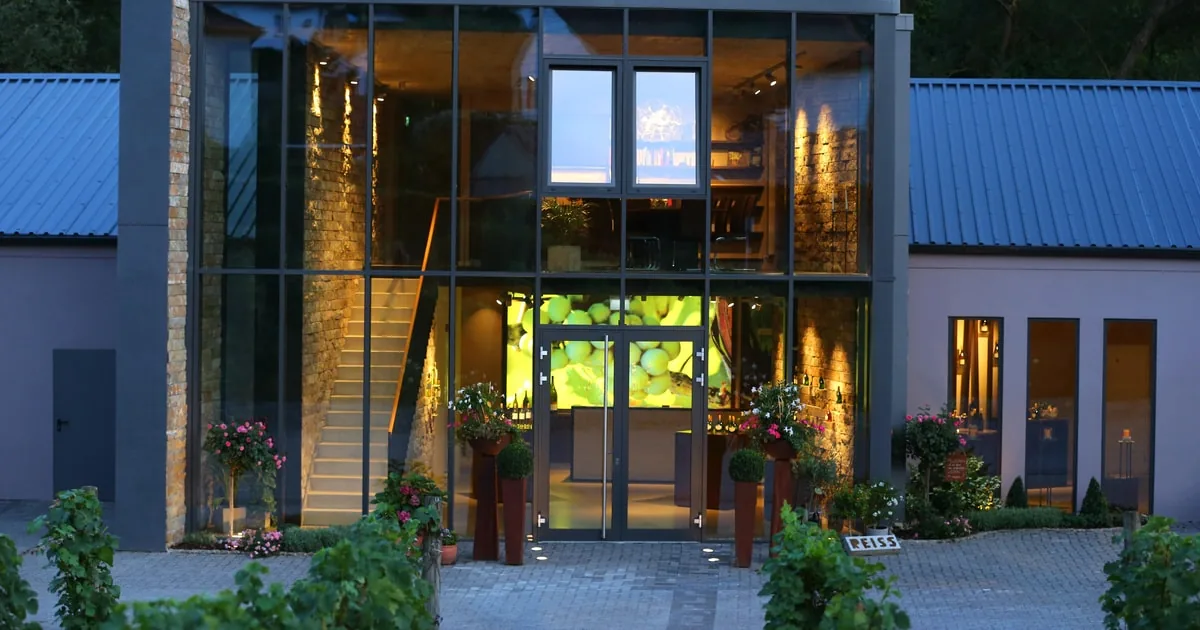 Family winery tasting
Würzburg: guided tour of the wine cellar incl. trio wine tasting
The four Romantic Road days are compared on Romantic Road day trips, with departure cities and inclusions side by side things to do beyond the palace.
Frequently asked questions
What is Würzburg famous for?
The Residenz, a UNESCO World Heritage palace built between 1720 and 1744 by Balthasar Neumann for the Schönborn prince-bishops; Tiepolo’s staircase ceiling of 1752 and 1753; Franconian wine, including the state cellar under the palace; and the Romantic Road coaches to Rothenburg. Start with what to see inside.
Why is the Würzburg Residence a UNESCO site?
It was listed in 1981, six years before the post-war reconstruction of the building was finished. Its staircase carries what the Bavarian Palace Administration calls the largest ceiling fresco ever painted, on an unsupported vault of 18 by 30 metres; see Tiepolo’s staircase ceiling.
Is Würzburg a wine town?
Where each of them takes place is on the cellar under the palace.