16 March 1945, and the forty-two years afterwards
On 16 March 1945 a British air raid nearly destroyed the Würzburg Residence. The central block survived — the Vestibule, the Garden Hall, the Staircase, the White Hall and the Imperial Hall — with its roofs destroyed. John Davis Skilton, a US Army Monuments officer, arrived in June of that year and was instrumental in preserving the art. Reconstruction of the building ran from 1945 to 1987.
What the sources say, and what this page will not add
A British air raid on 16 March 1945 nearly destroyed the palace. That is the statement this site is prepared to make and the extent of it. There are no casualty figures on this page and no adjectives attached to the raid, because the sources behind this site cover the building rather than the night, and a page about a palace is a poor place to summarise a city’s worst hours from memory. Plenty of pages will give you numbers. Ask them where the numbers came from.
What is documented, and what a visitor can see, is the shape of the damage. The centre of the building stood: Vestibule, Garden Hall, Staircase, White Hall, Imperial Hall, all of them open to the sky once the roofs were gone. Everything around that core had to be rebuilt.
John Davis Skilton
An officer of the US Army’s Monuments programme, he arrived in June 1945 and was instrumental in preserving the art. The gap matters: the raid was in March and the roofs were gone, which in a Franconian spring means a painted vault standing under whatever the weather did next for three months. That the staircase ceiling is intact today is not an accident of masonry alone.
If you take only one fact round the building with you, take the list of five. It is the difference between looking at a room and looking at a reconstruction of a room, and no label on the wall will make that distinction for you.
Forty-two years of putting it back
Reconstruction ran from 1945 to 1987. That is longer than the palace took to build: the Residenz was begun in 1720 and completed in 1744, twenty-four years. It also means that a visitor born after the war could have grown up, and reached middle age, while the work continued.
One consequence is set out on what to see inside: this site does not describe any interior as original unless a source says so, and the only rooms a source says so about are the five above. The Mirror Cabinet is not among them. Neither is most of what the guided tour walks through. That is not a complaint — it is a different and rarer thing to have seen, and the tour is the place to ask about it, since it is already inside your ticket.
UNESCO listed the palace in 1981, six years before the rebuilding finished. A World Heritage inscription granted to a building that was still a building site is an unusual sequence, and it is the fact about this place most worth carrying home.
Hearing it from somebody standing in the room
Very little of this is labelled. A guide is how you find out which wall is which, and the state tour inside the ticket is thirty free minutes of exactly that — English at 11am and 3pm, German every half hour. For the town outside, a booked walk does the same job. One reviewer of the standard walk described what it delivered: “Wir hatten eine wundervolle Tour. Petra war eine der besten Stadtführerinnen, die wir je hatten (und wir haben viele erlebt). Wir können diese Tour absolut empfehlen, eine perfekte Mischung aus Geschichte, Sagen und Städtebau.” — Ursula, Germany, on Würzburg: Guided Walking Tour. History, legend and town planning, in her words, which is roughly the mix this subject needs.
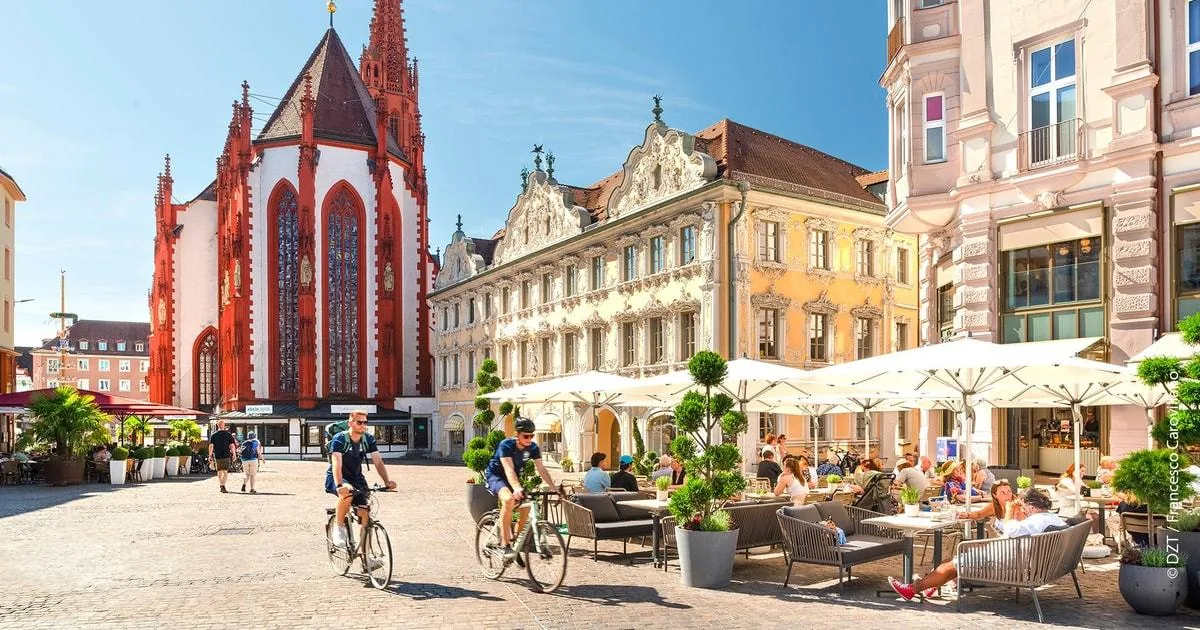 The standard walk
Würzburg: Guided Walking Tour
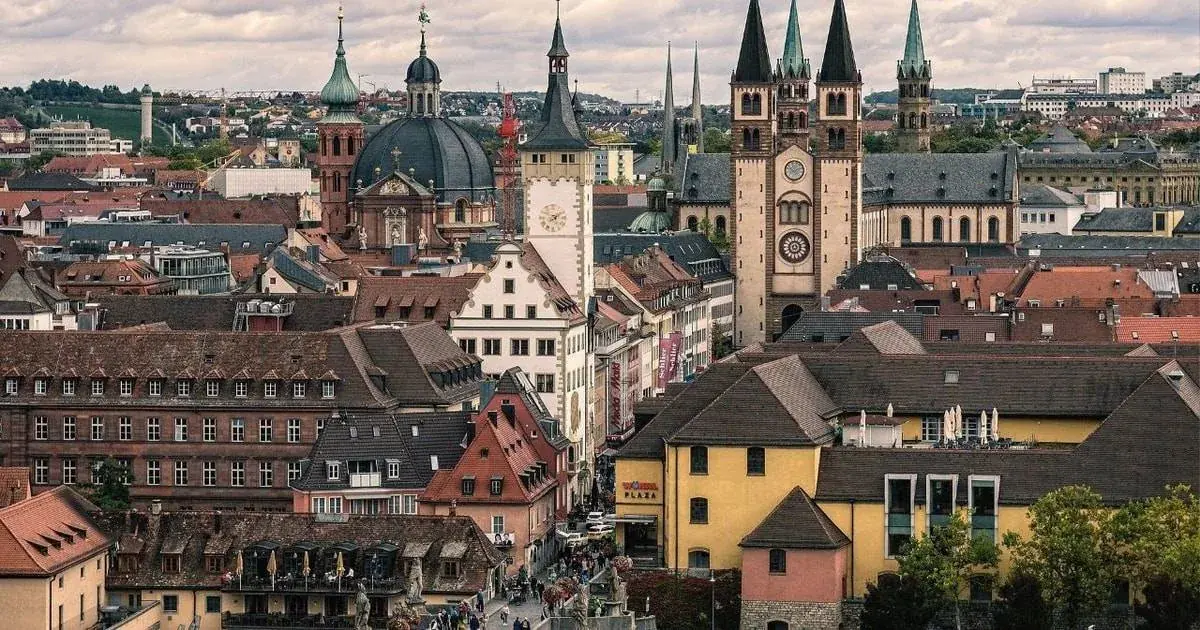 Private, per group
Würzburg: Private Walking Tour With Professional Guide
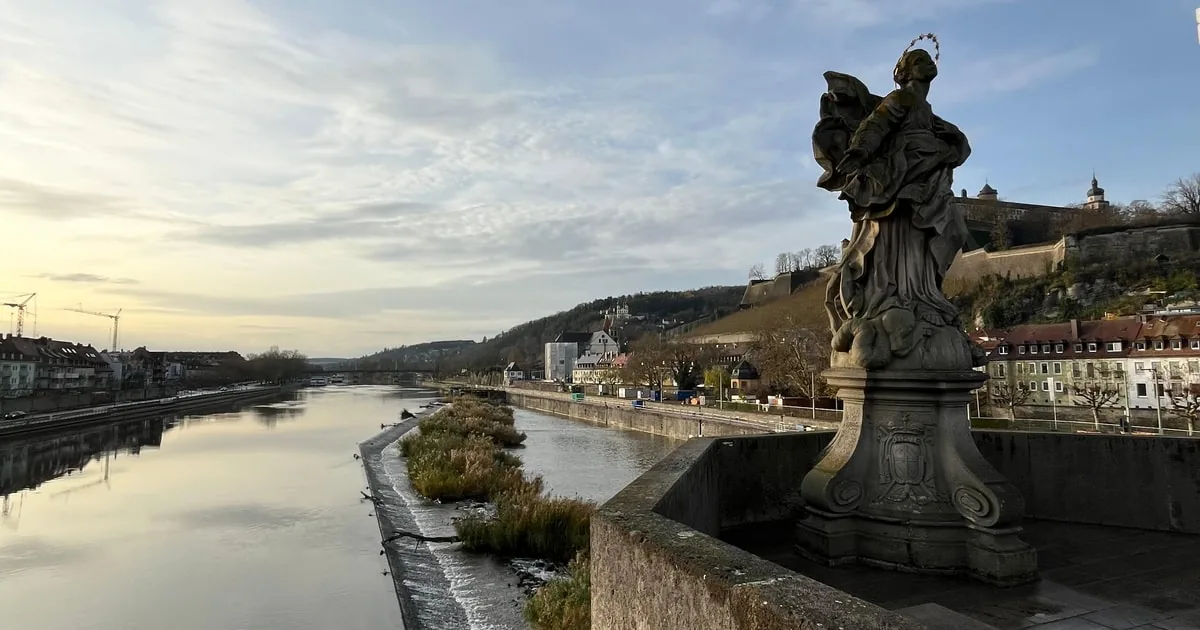 Includes entry
Würzburg in winter: Residence, Old Town and mulled wine
The building as it stands now is on what to see inside, and the room that needed no rebuilding is on Tiepolo’s staircase ceiling.
Frequently asked questions
What happened to the Würzburg Residence in the war?
A British air raid on 16 March 1945 nearly destroyed it. The central block survived — the Vestibule, the Garden Hall, the Staircase, the White Hall and the Imperial Hall — with its roofs destroyed. Reconstruction ran from 1945 to 1987. The room that came through best is on the ceiling page.
Who saved the Tiepolo ceiling?
John Davis Skilton, a US Army Monuments officer, arrived in June 1945 and was instrumental in preserving the art, three months after the roofs above the staircase were destroyed. What survived alongside it is listed on what to see inside.
Is the Würzburg Residence original or rebuilt?
Both, and the split is documented. Five spaces survived 16 March 1945; everything else is the product of a reconstruction that ran from 1945 to 1987, during which UNESCO listed the palace in 1981. This site does not call any other interior original. How that shapes a visit is on is it worth it.